Summer Diversions
Material with which to pass the lazy days of summer, touching on stray cats, opera, novels, mythology, and more.

June 2026
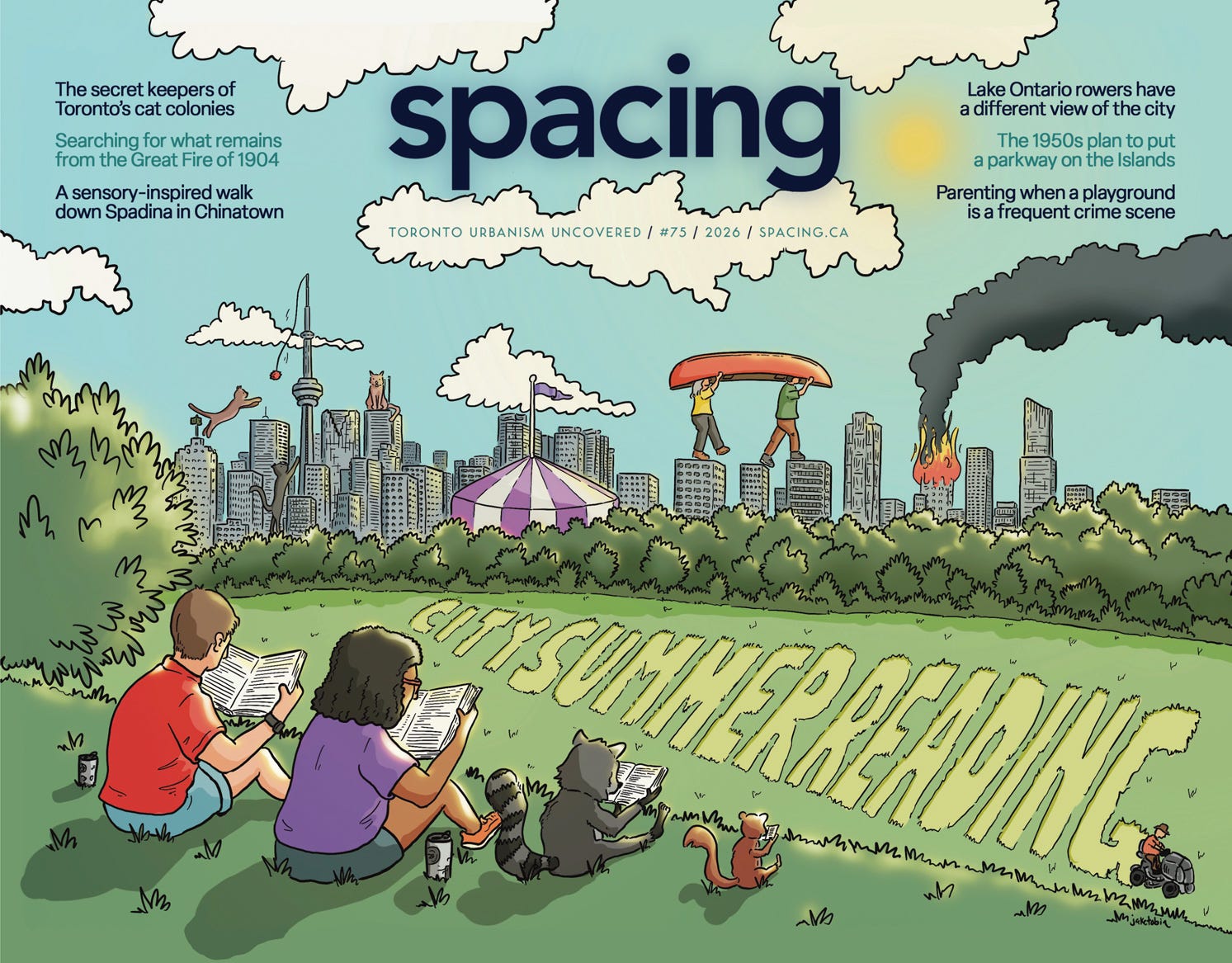
Summer is, at least ideally, a season that is a bit of a break in the year, a time to find the space to take it easy, meander and saunter, sit back and relax. So this newsletter – the end of spring, the start of summer – ventures over a miscellany of interesting reading, ideas, and places, with stray cats, opera, and mythology popping up as threads. Plus some scientific advice to do some of your summer reading outside – as Jake Tobin’s wonderful cover illustration for the upcoming issue of Spacing suggests.
Musing
Earlier this year I finished the novel Empire of Wild, by Cherie Dimaline. The novel integrates Métis folklore, and especially the legend of the Rougarou – a werewolf figure – into the life of a Métis community on Georgian Bay. I found the portrayal of fierce middle-aged spousal love really moving, although I thought the ending was a bit unconvincing.
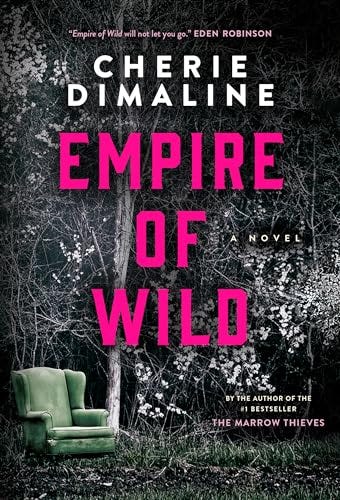
I read it both because the premise intrigued me, and because next year an opera based on the book will be coming to the Canadian Opera Company (to which we have a subscription). The story definitely has the makings of an opera – is sufficiently operatic, one might say – but I’m intrigued to see how it gets adapted for the stage. Already in the COC’s advance materials I can see that they have slimmed down the character list a lot, which would certainly be necessary. I’m excited to see the COC put on an original Canadian opera based on an original Canadian story, which doesn’t happen very frequently.
The book made me realize that one of my favourite genres of fiction is stories that integrate mythology into the everyday world, with regular characters having to discover and cope with that mythical presence. Two of my favourite examples are Gods Behaving Badly, which I read a long time ago, and River Mumma, which I just read last year. Gods Behaving Badly features the gods of Greek mythology trying to eke out an existence in modern London, England, culminating in a journey to the underground/underworld that is both literal – through London’s subway system – and mythological, to the Greek afterlife. River Mumma integrates Jamaican mythology into modern Toronto, as the heroine and her friends travel across Toronto seeking to retrieve an object belonging to the eponymous demi-god while other legendary creatures try to stop them.
This kind of integration isn’t easy, but both of these books feature satisfying and engaging endings (River Mumma’s set in a hilarious sendup of what is obviously meant to be Drake’s mansion) that really wrap up the mythology effectively. While I didn’t find Empire of Wild quite as successful with its mythology in the end, it was still a great read.
The Sneak Peek
For our upcoming summer issue of Spacing, we decided not to do our usual cover section theme, but rather do a “summer reading” issue where we can feature some longer pieces than usual on whatever Spacing-oriented subjects our contributors came up with. With the current economics of magazine publishing, our page count usually makes it challenging to incorporate longer pieces while still covering all the stories we want to include, so it was great to be able to put together some larger spreads.
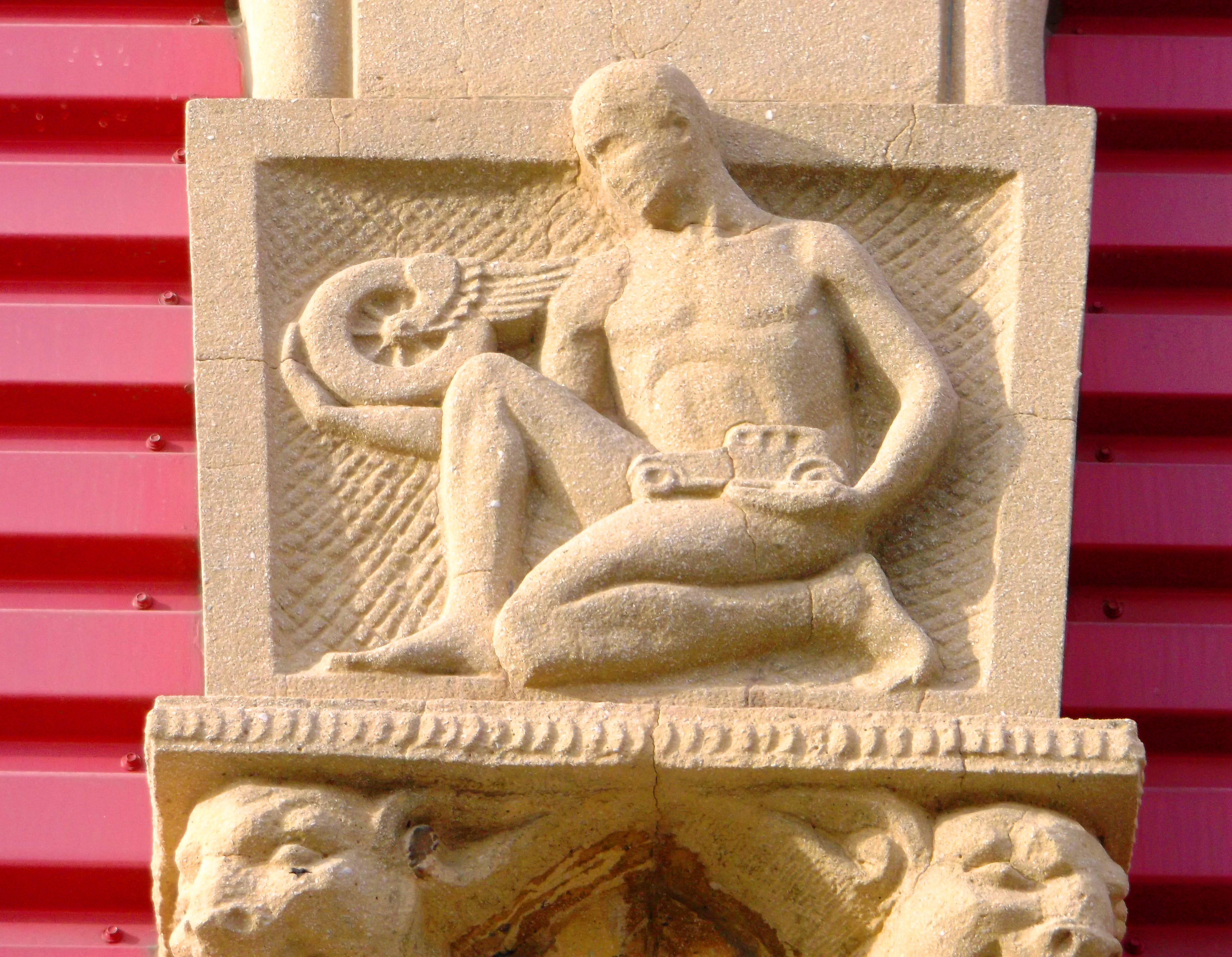
We have some great longer pieces by Angus MacCaull on the experience of living downtown as a father, Mike Carter on the spread and extent of the Great Fire of 1904 (see his remarkable website), and Lana Hall on the volunteers who take care of Toronto’s stray cats. Alf Holden, once editor of the now wrapped -up magazine Taddle Creek, explores the history of a building that has long fascinated me (it was across the street from where my parents lived for many years), the former Staples store at Yonge and Marlborough that features intricate sculptures on its façade (which is being preserved as part of a new development). The sculptures feature the speedy Greek god Mercury holding a car (it was originally created as an automobile showroom).
I took the opportunity of this issue to fill out an article I’ve been thinking about ever since I read Matthew Beaumont’s The Walker. Some of his thoughts mixed with my experiences of long pandemic walks and of walking with my father in his old age to get me thinking about the rest-less walker – how when we walk, the city tends to keep pushing us along rather than affording up places to settle in and absorb the experience of new places (unless we pay for a seat on a patio). Creating free places to sit and contemplate the urban landscape – a gesture some people make, and the city could do more of – helps to bind the city together, I propose.
As I write in my introduction to the issue, summer is a kind of in-between time between the busy spring (emerging from hibernation) and fall (getting back to business or school) – a time to encourage a bit of sitting back, finding a calm cozy spot, and sinking into a good read. We tend to think of summer reading as romance or mystery, material that is light and escapist, that carries you away from the everyday. But our new issue invites readers to be carried away not by star-crossed lovers or troubled detectives, but by stories and meditations about the city itself. The issue should be on store shelves and in subscriber mailboxes by mid-July.
The Tidbit
When I was a kid, my mom used to always tell me not to read in low light, because it was bad for my eyes. I never really believed her – I was quite capable of reading in all kinds of low light (a skill I now, with ageing eyes, look back on with envy) and if anything thought it was a kind of superpower. I thought it was an old (or in her case, youngish) wives’ tale.
But, it turns out, my mom might have been on to something. The fascinating case of Taiwan reveals that excessive early reading habits can, in fact, wreck your eyes. While it was long assumed myopia is genetic, an accelerating wave of myopia in Taiwan – where scholastic pressure means students spend an inordinate amount of time reading – revealed that too much reading indoors in fact increases the chance of developing myopia and other eye problems. The solution, it turns out, isn’t simply to spend time looking into the distance, but rather to spend time outside in the sunlight (or even just outside whatever the weather). They don’t study the impact of reading in low light, but it seems like that could have a similar negative impact.
It’s kind of interesting, too, in that it supports the long-standing stereotype of kids with glasses being those who are brainier and read a lot. I am quite lucky, given how much time I spent reading as a kid, that I only began losing eyesight and needing glasses (though for reading, not distance) at the usual middle age. Perhaps I was fortunate that my mom was keeping an eye out for me.
Read “The World Is Going Blind. Taiwan Offers a Warning, and a Cure” in Wired
Quotable
“After Fidelio ... he remarked that it sure wasn’t much like real life, but maybe we’d all be better off if when things went wrong we stood around and screamed for a while.”
- Alison Lurie, Foreign Affairs
I thought, given I talk about opera to begin this newsletter, that an operatic quotation might be in order. I’ve had this one on my list for a while – I read this book a couple of years ago. The quotation stood out particularly for me because we had just seen a production of Fidelio at the Canadian Opera Company when I read it! And also because it does sort of capture a truth about opera, and life.
I loved this novel about an improbable romance between Americans in England, written in the mid 1980s, both because it’s witty and generous without being sentimental, and because it perfectly captures the misery of 1980s England, which I encountered when I moved there for graduate school in 1989. The shoddy living quarters, depressing winter weather, miserable food, expensiveness, loneliness. But also that country’s odd appeal – the later charms of delightful summer, the lure of Anglophilia. I did end up staying there for a while, after all (as does the skeptical Midwesterner who makes that observation about his first opera).
Pic Pick
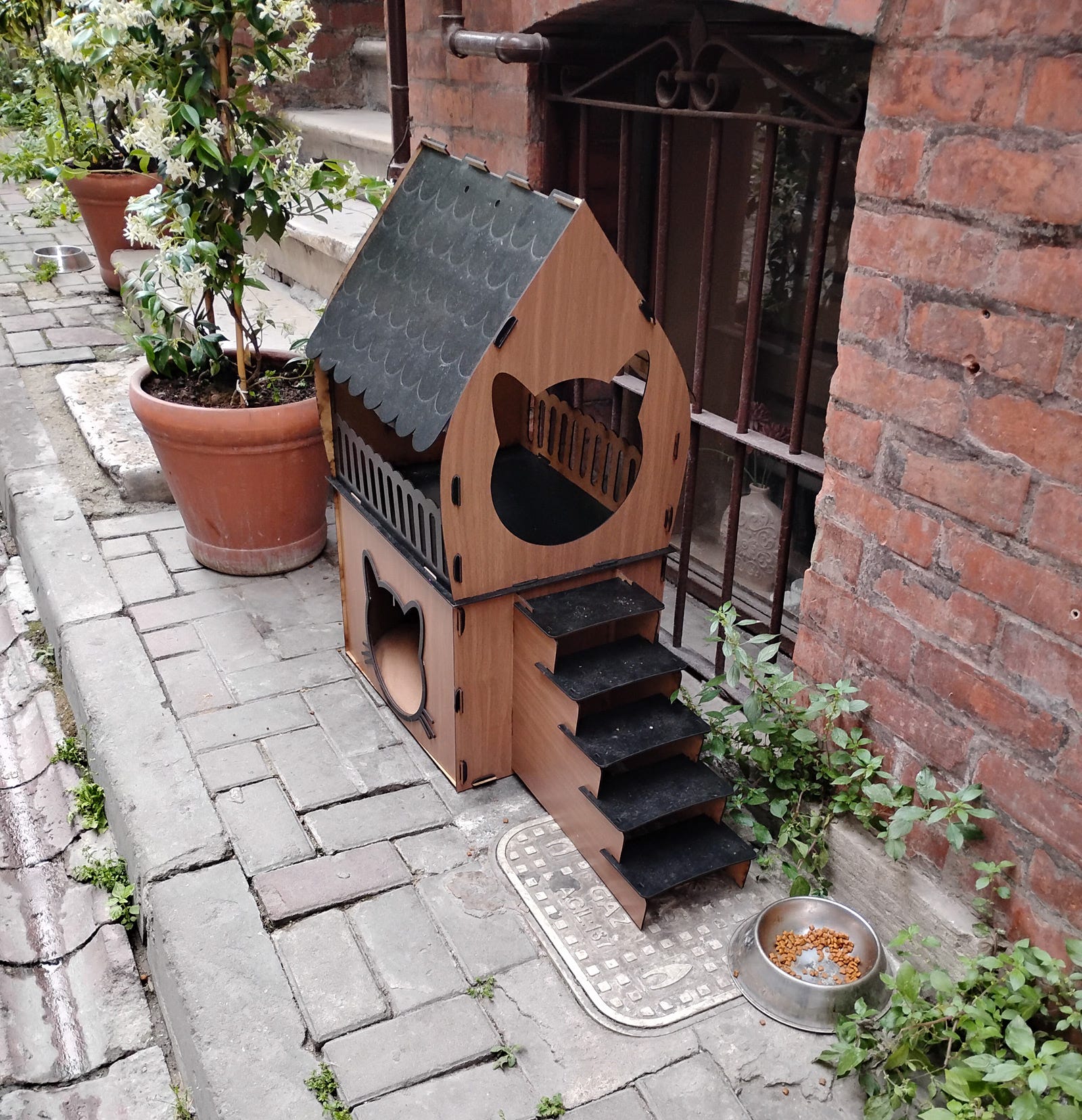
My wife and I had the privilege of visiting Istanbul in May. One of the delightfully random, “messy” elements of the city is the prevalence of stray cats – everywhere! Rather than being treated as a nuisance, it’s as if they are pets of the entire city. People not only put out food and water for them – they also build elaborate cat houses for them to reside in when they so choose. Cat architecture (catchitecture?).
We too have a stray cat population in Toronto, but it is much more hidden. No-one creates cute cat houses for them. Nonetheless, dedicated volunteers help to take care of those strays, and Lana Hall talked to them for her delightful story in the upcoming issue of Spacing. Toronto Animal Services chief veterinarian Johanna Booth tells Lana, “I think the most beautiful aspect of getting into feral cat work is seeing the beautiful people that are involved.”
The Catch-Up
It’s been gratifying that, a year after publication, there’s still a lot of interest in Messy Cities. Earlier this year, myself and my co-editors were invited to a wonderful discussion about “Messy Cities” hosted by the Brampton Board of Trade for their cleverly-named “Never Bored of Trade” podcast. We had lots of great questions from the hosts and the audience. We were also somewhat envious of their young, creative, and forward-looking Board of Trade compared to the Toronto one. Our discussion starts around the 17 m mark (time embedded in the link below).
Watch “Never Bored of Trade Podcast Episode 25 | Live Podcast with Co-Editors of Messy Cities” on YouTube.
The Shout-Out
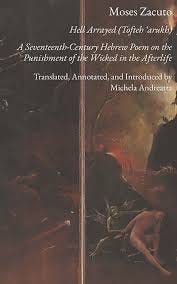
A few years ago I edited a translation of a Hebrew epic poem, Moses Zacuto’s Hell Arrayed (Tofteh ‘arukh): A Seventeenth-Century Hebrew Poem on the Punishment of the Wicked in the Afterlife, edited and translated by Michela Andreatta. It was a really interesting exercise, especially the translated verse, where I worked with Michela (for whom English is a third, though very fluent, language) to make sure the verse worked well. The poem is a kind of Hebrew Inferno (written by a rabbi living in Italy) tracking the punishment of a wicked man in Hell, and Michela worked hard to create a translation in verse, which is much more challenging than simply rendering it in prose.
So it’s exciting to see that not only is the book now out and available (and Michela mentions me in a nice note in the acknowledgements), but that it got an Honorable Mention (Best Translation) from The Mediterranean Seminar Prize for the Best Source Edition, Book Translation, or Essay Collection, 2025!