
Reading and readers
On reading Dickens again after decades, fake readers, and a sporty new Spacing.

Belated Winter 2026
I missed my end-of-winter deadline for this one. I could claim I was waiting for the cover of the next issue of Spacing, which only just got finalized, but really it was a combination of busyness and general winter tiredness, from both a particularly intense winter for Toronto and some annoyingly persistent colds. What I did do over the winter is read quite a lot, and I share some thoughts about one big novel I’ve been immersed in. It’s contrasted with a weird experience from the other side of the page – false, chimerical readers generated by that new bane of both reading and writing, artificial intelligence. Plus a slice of suggested good reads about cities, and the 19th century equivalent of a bike rack.
The Sneak Peek
In anticipation of World Cup games coming to Toronto, the upcoming issue of Spacing is all about soccer in my city. It was a subject that got a lot of writers excited – we had so many good pitches (pun intended) that we decided to devote the whole issue to the beautiful game. But if you’re not a soccer fan, fear not – many of the articles are about more than just the game, and explore how the sport builds community, speaks to Toronto’s history, and contributes to the city as a whole. And for the skeptics, John Lorinc dives into the politics of the World Cup deal. As we hope to do with every issue, this one reveals a whole new layer of the city.
I’ve long been a casual fan of soccer. I used to go to the minor league Toronto Lynx games at crumbling Varsity stadium in the 1990s, with a few hundred fans. I’ve watched the game blossom in Toronto as our major league Toronto FC team found its footing. But this issue showed me that soccer’s roots go way back in Toronto – we have long been a soccer city, if somewhat under the radar. I even discovered, thanks to Nancy Dutra’s contribution to the issue, that a mysterious staircase I came across on a walk south-east of Greenwood and Gerrard a few years ago was actually a remnant from a significant soccer stadium that used to exist at that location!
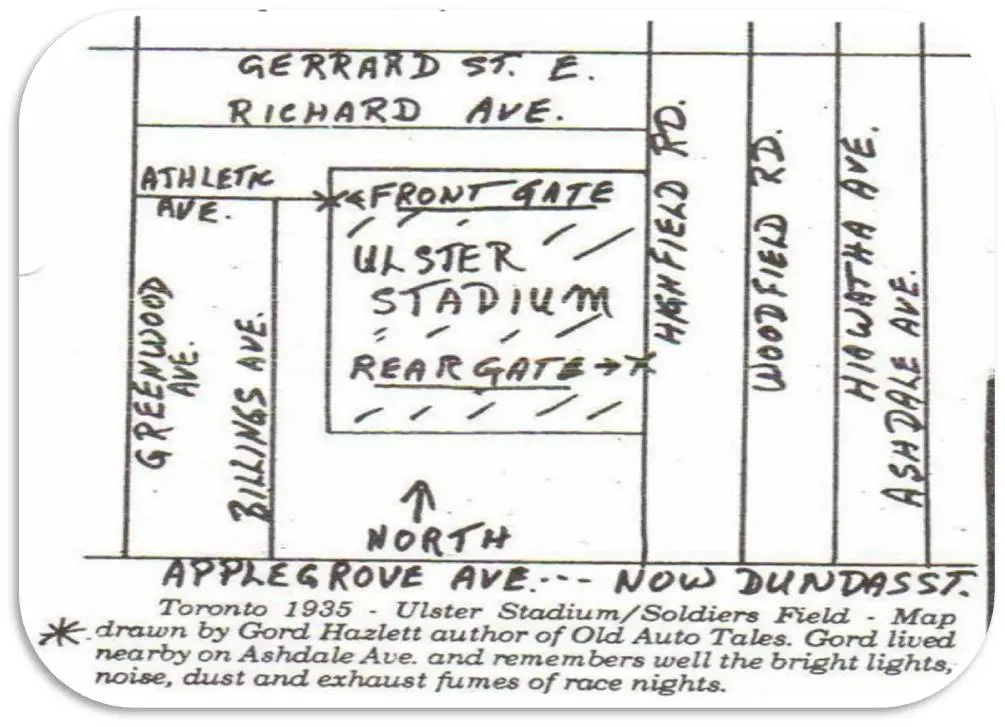
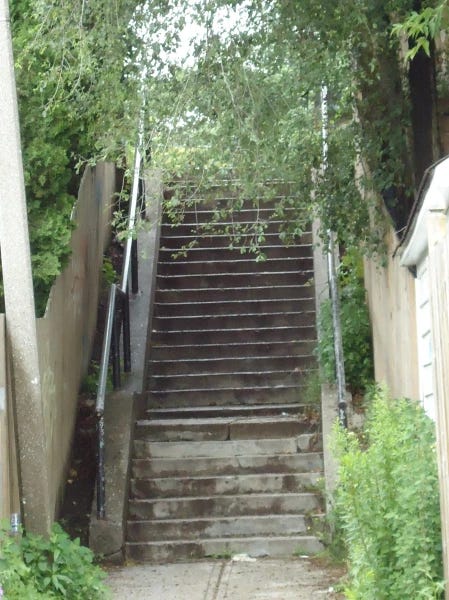
Our publisher and creative director Matt Blackett is even more versed in the game, as a player, a coach, and a dedicated fan. So this issue was quite a labour of love for the two of us. It was wonderful to see that it also resonated with such a variety of writers and communities, and we think it will resonate with both our regular readers and with some of the visitors to Toronto for the World Cup games who are curious about their host city.

The soccer issue of Spacing should be on bookstore shelves and in the mail by the end of April.
The Tidbit
“My name is Robert, and I’m an organizer of the London Wine and Dine Book Club, a London-based reading community with over 2,000 active members. Our group brings together academics, writers, and engaged readers who value close reading and thoughtful exchange around intellectually substantive works. ... Messy Cities caught our attention ... We would be delighted to feature Messy Cities in an upcoming Author Showcase.”
When I got this email, at first I assumed they were from London, Ontario – but then it seemed unlikely a book club there would have 2,000 members. It turned out they were – or rather claimed they were – from London, England. I guess one could Zoom? But Robert’s signature indicated he was the “Orgenizer”, a typo that seemed rather suspicious from a book club, especially since they used the North American z spelling rather than the British “organiser” spelling despite their putative British base.
Indeed, it turns out this is a scam that is going around targeting authors, using AI-generated text to flatter and seduce them. At first I was a bit baffled as to how a pretended book club would extract money, but my co-editor John Lorinc shared this New York Times article (gift link), “Hungry for Affirmation, Vulnerable to Scams: As a Writer, I Know the Feeling,” which reveals that if you show interest, you’re informed that there’s a fee for appearing. It’s kind of hard to imagine this working – normally book clubs are eager to talk to an author, rather than charging them for the privilege, and few authors have extra money to throw around. But it’s just generally awful that an author trying to publicize their work amidst the already overwhelming information stream now has to deal with scammers as well. Be on guard!
Quotable
“Railroads shall soon traverse all this country, and with a rattle and a glare the engine and train shall shoot like a meteor over the wide night-landscape, turning the moon paler; but as yet such things are non-existent in these parts, though not wholly unexpected. Preparations are afoot, measurements are made, ground is staked out. Bridges are begun, and their not yet united piers desolately look at one another over roads and streams like brick and mortar couples with an obstacle to their union; fragments of embankments are thrown up and left as precipices with torrents of rusty carts and barrows tumbling over them; tripods of tall poles appear on hilltops, where there are rumours of tunnels; everything looks chaotic and abandoned in full hopelessness.”
- Charles Dickens, Bleak House
I am reading a Charles Dickens novel for the first time since high school (which was Great Expectations, which I found baffling in Grade 9, and Tale of Two Cities, which I adored in Grade 12). I chose Bleak House, for reasons explained below, not realizing it was the longest of his many long novels. I’ve been trying to do “slow reads” of 19th century fiction, reading a chapter or portion a day, after starting with Tolstoy’s War and Peace a couple of years ago, though I confess I fell off the Bleak House routine every so often.
I’ve been struck by how brilliant a stylist Dickens is. He is a voluble writer, for sure, but his descriptions and analogies are often so good I don’t mind. As someone currently living in the midst of rail construction (for Toronto’s Ontario Line subway), the quotation above, describing the imminent arrival of railways (Bleak House is set a few decades before Dickens wrote it) really captures the chaos of the construction process I’ve been witnessing.
Bleak House is full of surprises. There’s the appearance of I think the first recognizable detective character in English fiction, already with many of the attributes (disguise, deduction) that will become standard. There’s a death by spontaneous combustion! And most surprising of all to me, there was the way half the book is narrated in the first-person voice of a young woman, Esther Summerson. She is rather saintly, like so many of Dickens’s heroines, but the first person voice gives her a lot more depth than his usual heroines.
The other narrative voice – an omniscient third person – is sardonic and satirical. I knew the book must have some satire – it’s about a never-ending lawsuit – but I was not expecting quite so much, on so many different topics. One of the most notable targets, which brings out a more unpleasant side of Dickens, is women who have the nerve to occupy themselves with matters beyond the household. Especially in the first half of the novel, women who give their time to external good causes are relentlessly condemned as ones who neglect their households and children while being useless and patronizing in the causes they support. The most sympathetic female characters, like Esther, are admired for being capable, but only within the context of household management.
I started reading Bleak House after reading a discussion about an academic paper that tested the ability of students, who were studying at a midwestern US university to become high school English teachers, to understand the novel’s first seven paragraphs. It included those first seven paragraphs, which are brilliant, and made me want to read more. The paper itself found that most of the students were unable to understand those paragraphs, and also didn’t really know how to go about figuring them out (although there was also a small percentage who were completely on top of the material). Of course this ignited the usual frenzy of back and forth about “students today.” I will say, though, that a lot of the references in that opening (and the rest of the book) are very specific to 19th century England, and that especially the sardonic narrator often speaks in a circumlocutious style, with obscure contemporary references, that even I sometimes have a hard time figuring out. So while the findings do seem concerning, the opening of Bleak House doesn’t seem like the most reasonable test.
It reminded me a bit of the South Park episode where the elementary school kids are tested for Attention Deficit Disorder by having A Farewell to Arms read to them, and their inability to pay attention for any extended period of listening to the book proves they have the condition. Maybe that book – American, 20th century, simpler style – would have been a more appropriate choice for the university students to start with.
Still, I’m very much enjoying Bleak House despite some of the more questionable or obscure bits, so on that score I’m glad the study brought it to my attention.
Pic Pick
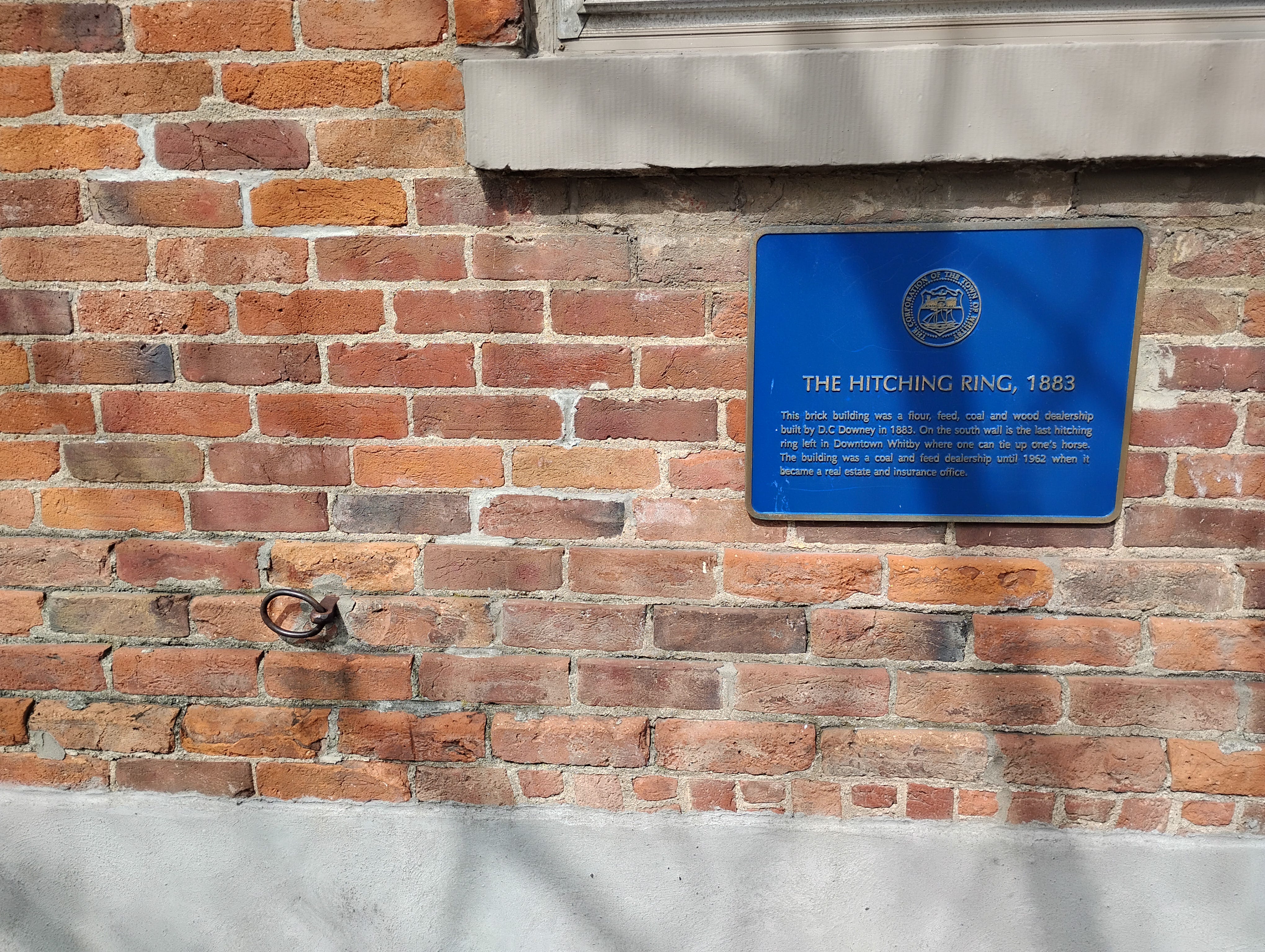
We recently had occasion to visit downtown Whitby (Ontario), which has quite a charming old small-town downtown that includes quite an extensive set of historical plaques. This was my favourite – the one marking a last remaining hitching post. The phrasing “the last hitching post remaining in downtown Whitby where one can tie up one’s horse” suggests it’s still operational, should you ride your horse into the city. Perhaps, if the price of fossil fuels continues to rise, someone will take up that traditional form of sustainable transportation. In a sense, hitching posts were the bike ring-and-posts of the nineteenth century.
The Catch-Up
Messy Cities has continued to generate interesting discussions!
Bloomberg CityLab talked about the book with my co-editors Leslie Woo and Zahra Ebrahim in “In Praise of Urban Disorder”
The podcast “Booked on Planning” interviewed my co-editor Zahra Ebrahim about the book in the episode “Mess Might Just be the Secret Weapon That Planners Forgot”
The “Urban Springtime” blog by geographer Gerben Helleman engaged in depth with the book in the article “Messy cities: how to strive for more spontaneity in the planned city?”, notably doing an interesting analysis of the words used to describe neat versus messy urbanism.
The Shout-Out
The concept of Messy Cities was originally inspired by the Los Angeles urbanist James Rojas, who we gave pride of place to with the first essay in the book. He recently wrote a lovely essay about how exploring Latino urbanism opened his mind to a different kind of city-building than what was taught in planning school, one that is very much in the vein of messy urbanism:
“A conventional planning analysis of East Los Angeles would focus on maps, census tracts, income levels, housing conditions, gang activity, and violence, producing a narrative of deficiency and decline. But that was not the city I experienced. I lived in a place filled with social life, neighbors talking across fences, front yards doubling as living rooms, informal economies unfolding on sidewalks, music spilling into the streets, and constant acts of care and adaptation. What looked like disorder through a regulatory lens felt like vitality from within.”
Read “Learning to Reject the Transactional City” by James Rojas