
On the water
The implications of lakes in Toronto and beyond, plus Biblical graffiti and historical verse

Summer 2025
I seem to be slipping into a seasonal rhythm for this newsletter – which will perhaps grant a little more flexibility. This issue is fairly seasonal, in fact – featuring Toronto’s waterfront, always at its most popular in summer, and also some musing about stories of summer sailing in other waters. We also make an unexpected poetic discovery, and explore instances of the Bible in the city, written on walls and preached in the streets.
The Sneak Peek
The next issue of Spacing will be in stores and subscriber mailboxes shortly. It’s focused on Toronto’s waterfront – there have been huge developments there in recent years, notably the recent opening of the new mouth of the Don River and Biidaasige Park, along with the continuing development of the East Bayfront. We featured the waterfront way back in 2007, but at that time it was mostly about the potential – and it wasn’t clear if that potential would be fulfilled. Now, almost two decades later, while there have been hiccups and setbacks, it’s remarkable to see that a lot of the promise is well on the way to being fulfilled.

The port is a fairly limited part of Toronto’s economy these days, so it’s easy to forget that it was in fact the reason Toronto was founded where it is. As I write in my editor’s introduction in the issue, Indigenous peoples had no great need for harbours – the canoes they used for water-borne transportation could be carried up to safety on shore, or travel up rivers. But the larger ships that European settlers depended on for transportation, supplies, and trade had to be anchored in the lake when not in use – and if exposed to the full fury of a Lake Ontario storm while at anchor, would be in danger of being sunk or dashed to pieces. They needed a harbour – a place where they would be sheltered while at rest. And the Toronto Islands – then a peninsula – provided an ideal harbour on the northern shore of the lake. Toronto owes its very existence to those islands, specifically, the sheltered harbour they create.
In exploring the waterfront, we’ve looked beyond some of the highlights and lowlights that are already well covered, to look at less frequently discussed questions that nonetheless fundamentally shape this civic treasure. If Toronto exists because of its harbour, how has the shipping it shelters shaped the shoreline? By contrast with the rest of the built-up city, the waterfront provides a blank slate that opens space for architectural creativity – but how can these new buildings best shape and reflect their lakeside environment? What is the potential for public art in these new spaces? How can we take full advantage of the waterside to expand swimming opportunities for new residents and visitors? And why can’t we get the streetcar line to the port lands going? Meanwhile, an accompanying article online traces the long history of Toronto’s varying shoreline over millennia. Keep an eye out for the new issue to get some answer to these questions and more.
The Tidbit
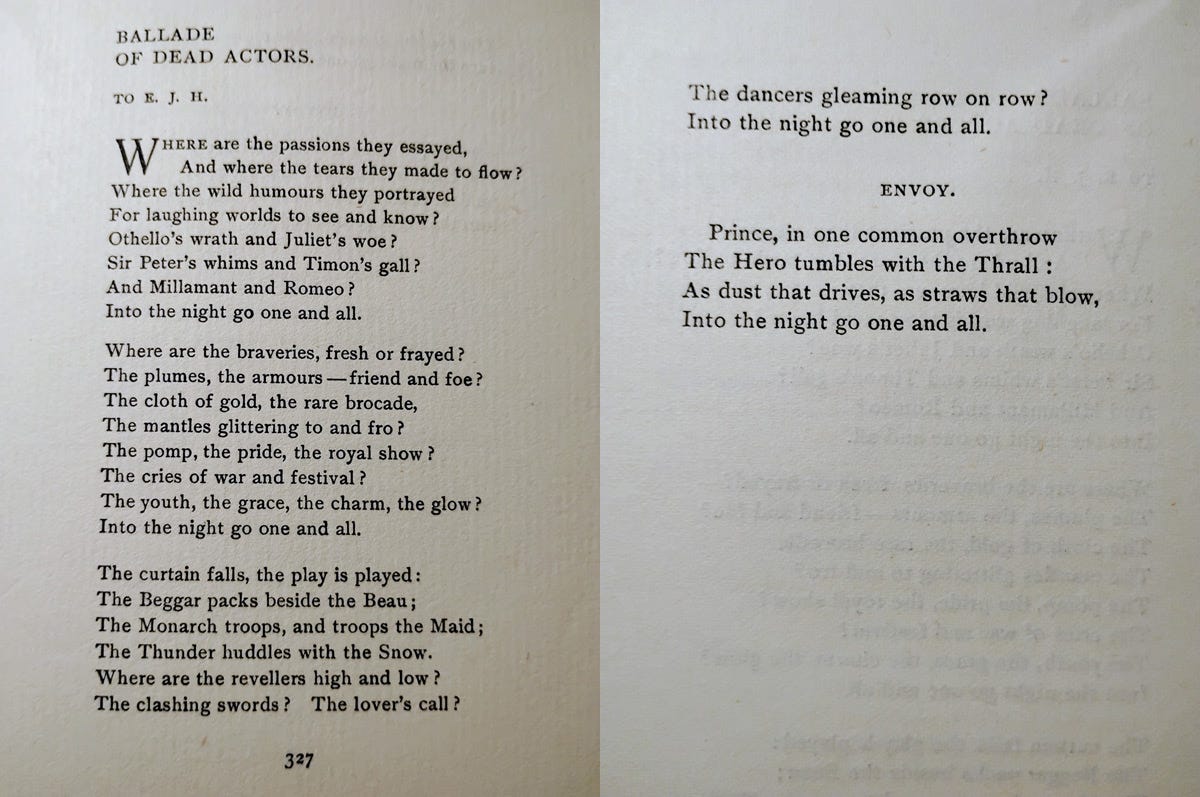
In my historical work, I study a sixteenth-century amateur poetry competition in the French city of Rouen. The participants composed poems in honour of the Virgin Mary using late medieval poetry formats like the ballad and the rondeau. A few years ago, I realized that Canada’s most famous poem, “In Flanders Fields,” used one of these ancient formats, the rondeau. Intrigued, I dug into the story and discovered there was a late 19th century fashion in England and the colonies (including Canada) for reviving these medieval French formats. I wrote about this connection in the Literary Review of Canada.
A couple of weeks ago, our local antiquarian bookstore, The Scribe, held its annual $5 sale. As I browsed the tables, I came across a pile of chapbooks of poetry – and on the top was a booklet of poems from that particular obscure fashion! It’s a collection of poems in the form of the French medieval ballad, with recurring refrains at the end of each stanza and ended by a short “envoy,” some of which, like the ones I study, address a “Prince” (the notable who presided over the original contest). They are by William Ernest Henley, an English poet at the end of the 19th century notable in his time, though now largely forgotten. I feel like it was a bit of fate that this particular chapbook was lying on top when I came in – otherwise I probably wouldn’t have found it in the pile of random poetry, and I imagine I am the only person who came into the store for whom this particular book would have been of interest (it is not, it has to be said, the most memorable verse).
What’s Up
In my last newsletter, I wrote about the imminent publication and launch party of the book I initiated and co-edited, Messy Cities: Why We Can’t Plan Everything. We had a wonderful launch party, which included many of the contributors to the book.
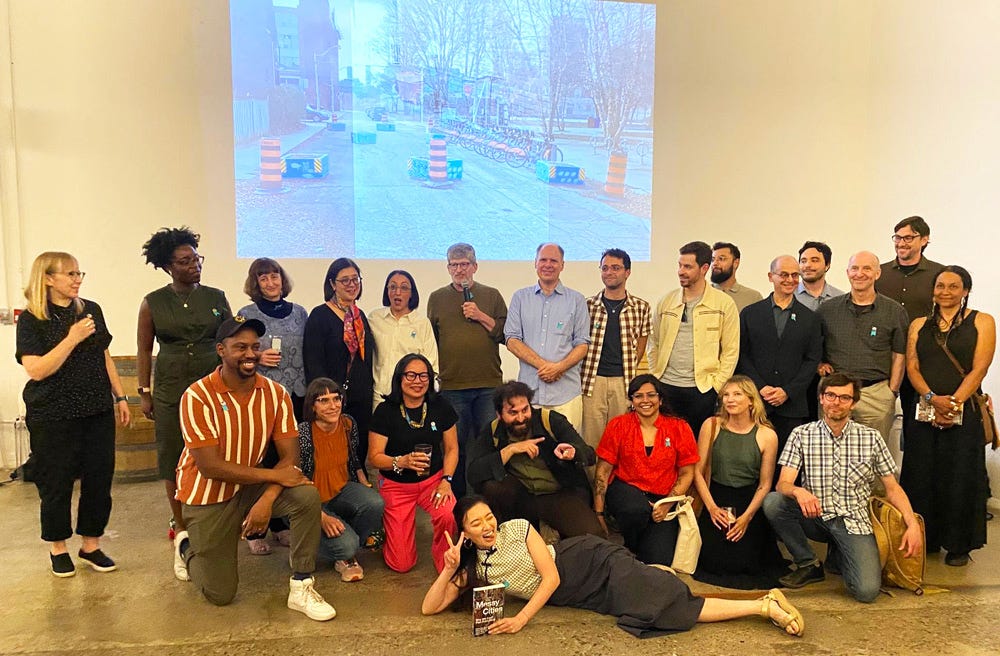
Since then, I’m very pleased that the book has received a lot of positive attention. The Globe and Mail listed it as one of its 35 “best of summer books,” and Bloomberg Cities listed it under its “5 summer reads for urban innovators.” It’s been on and off the CBC Canadian non-fiction bestseller list (which is based on sales at independent bookstores), reaching #6 on the list a couple of times. And Coach House Books has had to do a second print run already! A big thanks to everyone who has purchased a copy.
There will be more events in the fall about the book, featuring the editors and contributors, including a chat at Queen Books on September 30 and a panel discussion with the editors at the Toronto Public Library on October 21.
Quotable
“BETTER DROWNED THAN DUFFERS IF NOT DUFFERS WONT DROWN”
- Arthur Ransome, Swallows and Amazons
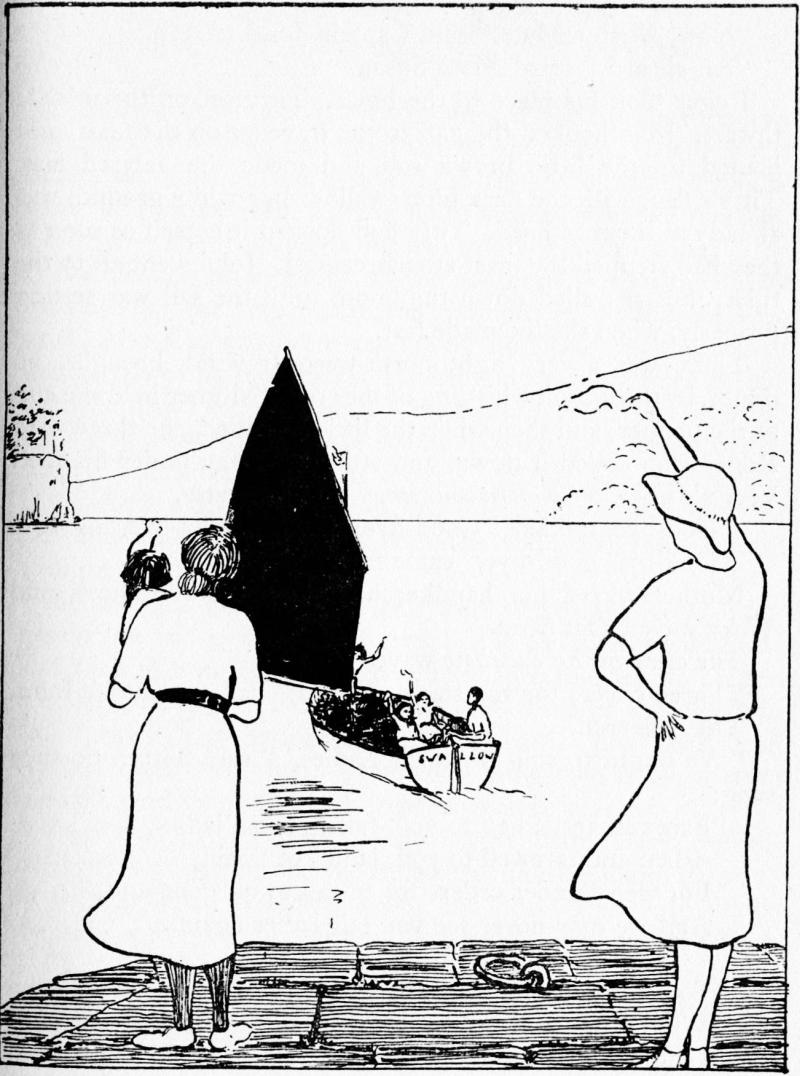
I recently finished re-reading the classic children’s book Swallows and Amazons. Published in 1929, it tells the story of four English siblings, children and what we’d now call tweens, who have adventures sailing on a lake in England’s Lake District during their summer holiday. I re-read it because I had watched the 2017 movie adaptation, and I found it deeply annoying. It wasn’t the addition of a spy plot that irritated me – not a lot happens in the book, so I can understand adding some extra excitement to the story, and there’s good evidence that the author, Arthur Ransome, who is clearly the model for the character of Uncle Jim, in fact worked for intelligence services earlier in his career. What was irritating was that the children in the movie are incompetent, irresponsible, and backbite each other – which is the complete opposite of the spirit of the book.
The book opens with the quotation above, sent by telegram by their Royal Navy captain father after they have written to ask permission to go sailing on the lake without adult supervision. The father is saying they will manage and be safe if they’re not idiots (and if they are idiots he’d rather they drown). The whole book is about how they are competent, have skills, learn skills they don’t already have, take responsibility for their situation, and work as a team, and while they take risks and have disagreements they figure out how to get over them. (All the while, their mother and other adults provide basic background support, like food, but then leave them to manage themselves.) It is modelling competence in a realistic way for their age, celebrating the skills and ability of children.
But in the movie, by contrast, the children continually show incompetence (losing their food, almost drowning the youngest, not knowing how to cook, not doing what they promised to) and snipe and blame each other. It seems to me this change reflects, in part, our society’s decreasing faith in the abilities of children. It’s ironic to apply the word “infantilization” to children, but in a sense that’s what’s happening – we increasingly treat them as incapable of doing anything themselves. It evokes the whole current debate about the need for children to be able to engage in “risky” play. Some people are deliberately developing spaces for such play – but they have to do specifically because it’s increasingly rare.
Now, the risks in Swallows and Amazons are sometimes beyond what anyone would advocate nowadays (the children, including the youngest who can barely swim, never wear lifejackets). But the principle that children are, in fact, capable of doing things themselves and need to be able to face challenges without direct adult supervision is valuable. One of my favourite assertions of this principle is the program “Haircuts by Children” by the art collective Mammalian Diving Reflex, which is exactly what it sounds like: “Let them cut your fears away as they prove themselves creative leaders, capable and responsible citizens and dedicated coiffeurs.”
Pic Pick
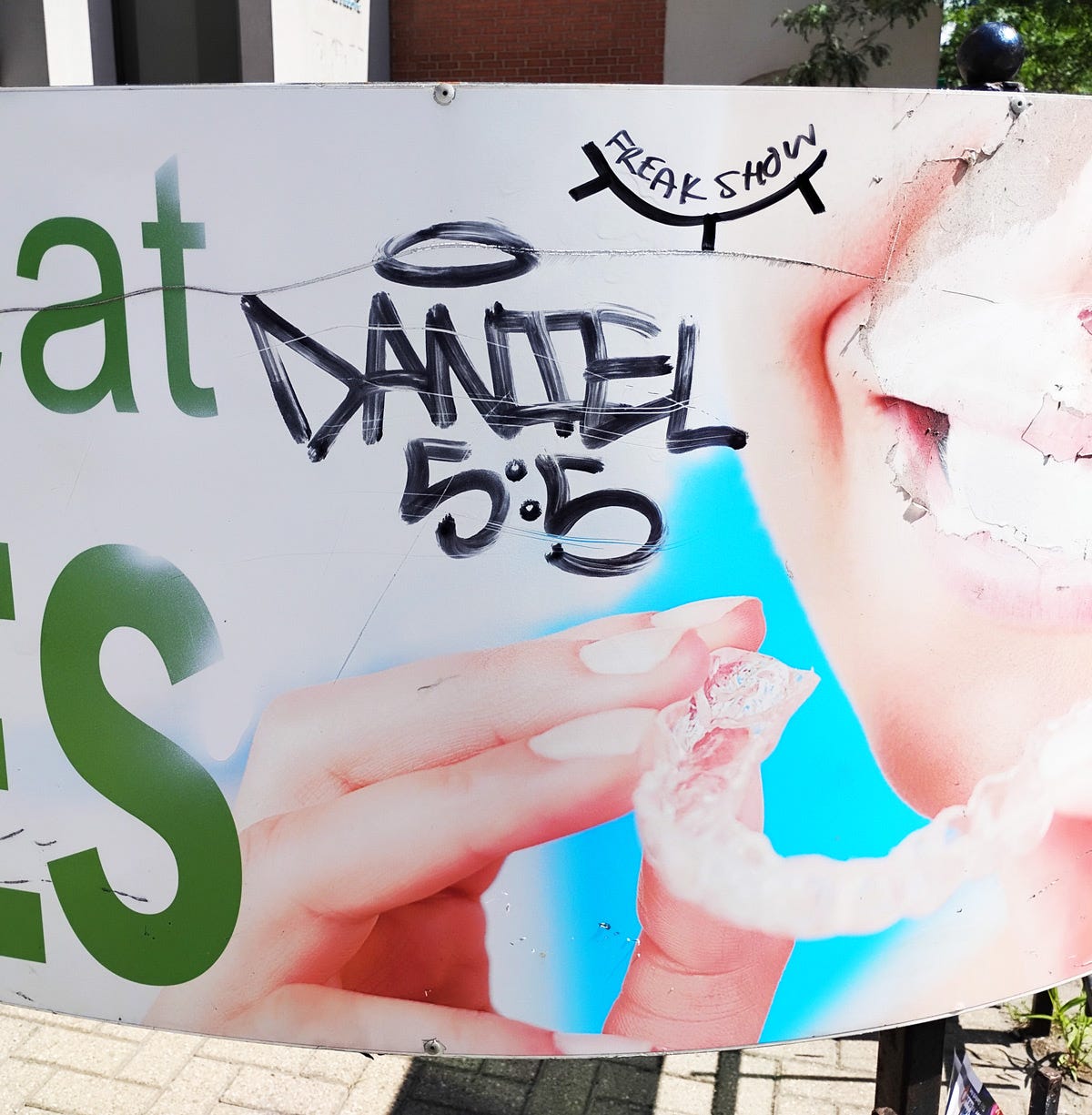
I've been seeing this "Daniel 5:5" graffiti around and wondered if it was some kind of evangelical thing. But when I looked it up, it is in fact a Biblical passage about ... graffiti! Divine graffiti: a mysterious hand writing on a wall. So this is kind of meta-graffiti – graffiti about graffiti.
The passage (King James version) is: "In the same hour came forth fingers of a man's hand, and wrote over against the candlestick upon the plaster of the wall of the king's palace: and the king saw the part of the hand that wrote."
The context is that, during the Babylonian captivity, the King of Babylon is having a feast where he's desecrating the gold and silver from the temple in Jerusalem. The mysterious hand appears and writes 4 words on the wall, which Daniel is summoned to interpret. He says they foretell the king's doom, and indeed he's killed that night and his kingdom falls.
This is, it turns out, the origin of the phrase "the writing on the wall," meaning a harbinger of impending doom. I'm not sure if this is part of the intended meaning of the modern graffiti, though certainly there’s an increasing sense of impending doom in the air these days.
The Shout-Out
My late father-in-law, Clark, began a weekly Zoom music get-together with friends during the pandemic, where they would take turns playing songs, mostly from the folk music repertoire, for each other and any friends and family who dropped in. One of the songs that stuck with me particularly was this original tune by his friend Sheldon “Doc” Dawe. It captures a colourful character from Toronto’s east side who shares his own Biblical preaching with anyone passing by.
Listen to Dr. Dawe, “Bearskin”
So important and pleasurable to be connected to the positive aspects of our City. Thank you. MH
Always fascinating and compelling.